What is Traditional Programming?
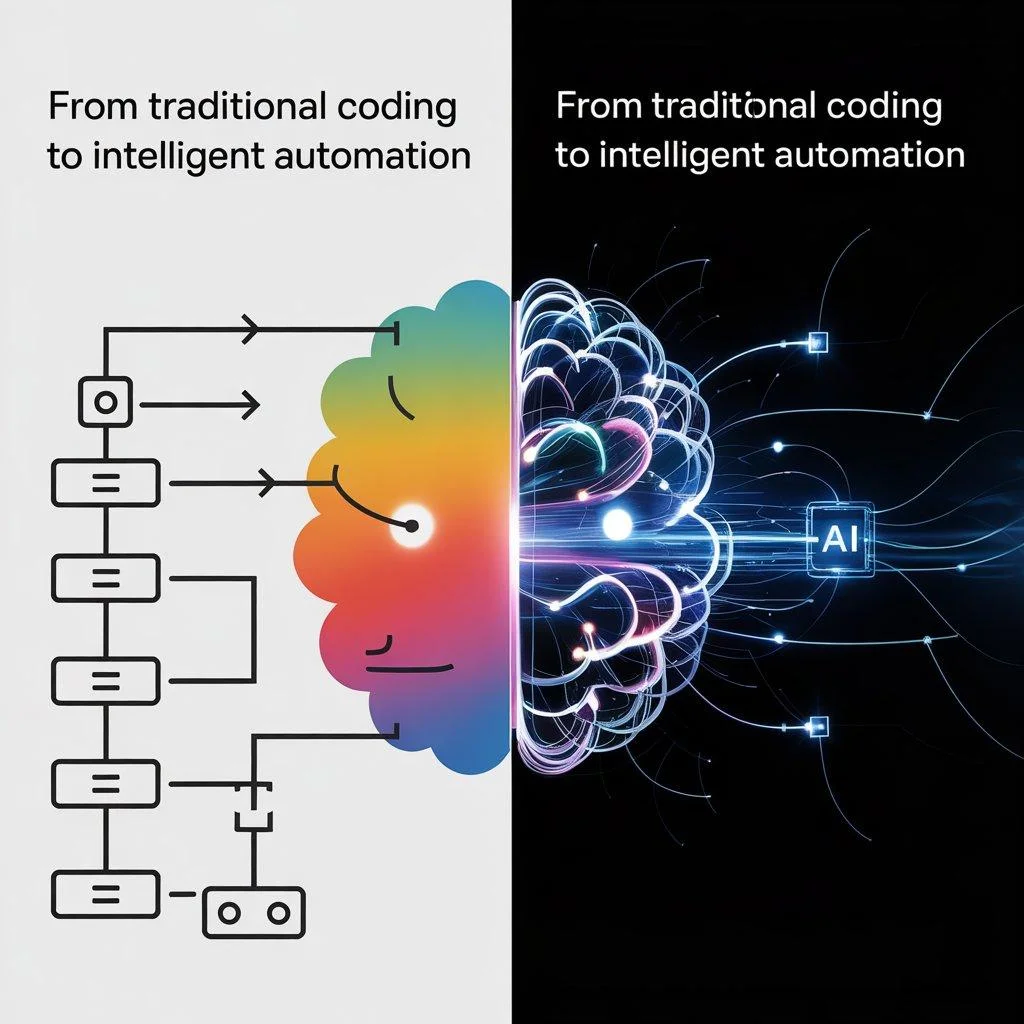
Traditional programming is how we’ve been writing software for years. A human programmer writes step-by-step instructions (code) that a computer follows.
How It Works:
A programmer writes rules and logic in a specific programming language (like Python, Java, or C++).
The computer follows these rules exactly—it does only what it’s told.
If something changes or goes wrong, a human must update the code manually.
Examples of Traditional Programs:
A calculator app that follows fixed rules for addition, subtraction, etc.
A banking system that processes transactions based on predefined conditions.
A website that displays content based on user input.
Key Feature: Traditional programs are static—they don’t change unless a human reprograms them.
What are AI Agents?
AI agents are advanced software programs that learn, adapt, and make decisions on their own. They don’t just follow fixed rules—they observe, analyze, and improve based on data.
How AI Agents Work:
They receive data from their surroundings (text, images, audio, etc.).
They use machine learning and AI models to understand patterns.
They make decisions without needing human input.
They learn from mistakes and improve over time.
Examples of AI Agents:
Chatbots like ChatGPT that understand and respond like a human.
Self-driving cars that analyze traffic and make driving decisions.
AI-powered customer service bots that solve problems automatically.
Key Feature: AI agents are dynamic—they learn and evolve without manual reprogramming.
AI Agents vs Traditional Programming – Key Differences
| Feature | Traditional Programming | AI Agents |
|---|---|---|
| Rules | Fixed, written by humans | Learns rules from data |
| Decision Making | Follows strict instructions | Makes decisions based on patterns |
| Adaptability | Does not change unless reprogrammed | Learns and improves over time |
| Error Handling | Needs manual debugging | Can detect and fix errors automatically |
| Example | A calculator, basic website | ChatGPT, self-driving cars |
Why Are AI Agents Becoming More Popular?
AI agents save time, improve efficiency, and reduce human effort in many areas. Businesses use them for automation, healthcare uses them for diagnostics, and tech companies use them for chatbots and smart assistants.
However, traditional programming is still important for building structured, reliable systems that don’t need learning or adaptation. Many modern applications combine both AI and traditional programming for the best results.
The Future – Will AI Agents Replace Traditional Programming?
Not entirely! Traditional programming is still needed for building the foundation of applications. However, AI agents will take over complex, data-driven tasks that require learning and decision-making.
In the future, we may see more AI-powered development tools that write code on their own, making programming even more efficient.
Both AI agents and traditional programming play important roles in technology. While traditional programming follows strict rules, AI agents think and learn on their own. As AI technology improves, we can expect more intelligent systems that can adapt, automate, and innovate—making life easier for everyone!